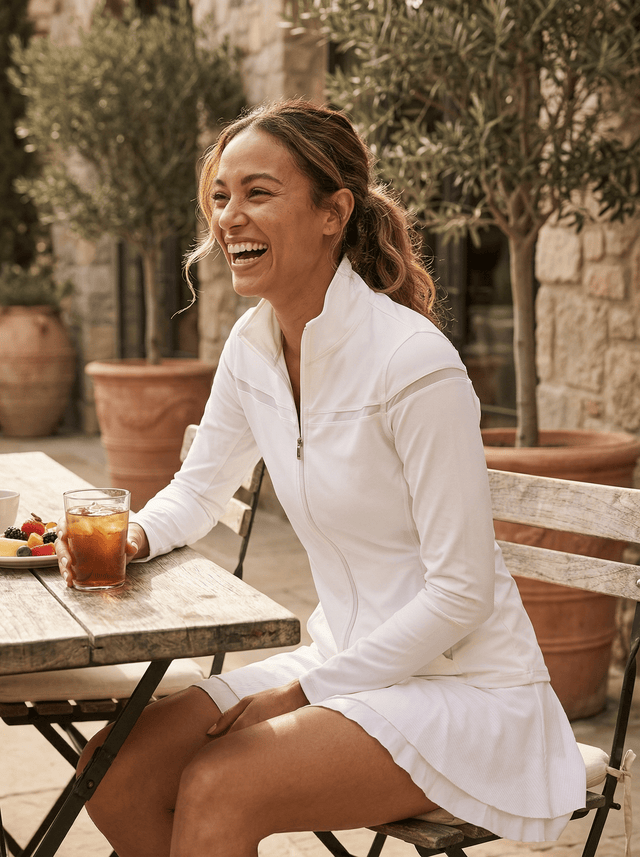
A white tennis skirt, a fitted polo, and a favorite training tank can look equally refined in recycled polyester or organic cotton. The difference reveals itself once the match runs long, the temperature rises, or the garment enters its hundredth wash. In the conversation around recycled polyester vs organic cotton activewear, there is no universal winner. There is, however, a smarter way to choose: begin with the movement, climate, and longevity your wardrobe requires.
For athletes who expect polish as well as performance, fabric is not a footnote. It shapes how a piece drapes, how quickly it dries, how it feels against the skin, and how well it earns its place in a considered wardrobe.
Recycled Polyester vs Organic Cotton Activewear: The Real Difference
Recycled polyester and organic cotton address sustainability from different directions. Recycled polyester gives existing plastic waste, often post-consumer bottles, another life as technical yarn. Organic cotton is grown without synthetic pesticides and fertilizers, with standards that can also support healthier soil and ecosystems.
That origin story matters, but it is only one part of the decision. A garment's total impact is influenced by how it is made, dyed, transported, washed, and worn over time. The most responsible activewear is not simply made from a preferred fiber. It is designed to perform beautifully, remain in rotation, and resist the disposable cycle that has defined too much apparel.
For court sports, golf, and fitness, performance requirements often make recycled polyester the more natural foundation. For low-intensity movement, recovery, travel, and everyday layering, organic cotton can offer a softness and ease that feels distinctly luxurious. The best choice depends on when and how you plan to wear it.
Why Recycled Polyester Performs on the Move
Recycled polyester is a technical fiber. It is lightweight, durable, and naturally resistant to absorbing much moisture. Rather than holding sweat close to the body the way cotton can, it can be engineered into fabrics that move moisture outward and dry quickly. That is a meaningful advantage during a humid doubles match, a sunlit round of golf, or a studio session followed by a full day of errands.
Its versatility also gives designers room to create elevated performance silhouettes. Recycled polyester can be blended with stretch fibers for mobility, knit into breathable structures, and finished with a smooth hand feel that supports clean lines in skorts, dresses, leggings, polos, and jackets. It holds color well, which helps activewear maintain its visual precision through repeated wear and laundering.
Durability is another part of the sustainability equation. A performance piece that retains its shape, color, and function can become a long-standing wardrobe essential rather than a short-lived purchase. At InPhorm NYC, recycled performance fabrics support the idea that sport-specific apparel can be technically prepared for play while still looking intentional beyond the court.
Recycled polyester does have limitations. Because it is petroleum-based, it is not biodegradable. Synthetic garments may also shed microfibers during washing. Quality construction, thoughtful care, and washing only when necessary can help reduce that shedding and extend a garment's useful life. It is also worth recognizing that not all recycled polyester is identical. Recycled content, fabric construction, manufacturing practices, and finishing treatments all influence a final product's performance and footprint.
When recycled polyester makes the most sense
Choose recycled polyester when sweat management, quick drying, stretch, and shape retention are central to the experience. It is especially well suited to tennis, pickleball, padel, golf in warm weather, running, conditioning, and travel days when you need one piece to carry you from activity to everything after it.
Where Organic Cotton Earns Its Place
Organic cotton offers a different kind of performance: breathable, familiar comfort with a softer, more natural hand. It is easy to appreciate in relaxed tees, sweatshirts, joggers, warm-up layers, and lower-intensity fitness pieces. For sensitive skin, the feel of cotton can be especially appealing, particularly when the fabric is minimally finished and well made.
Growing cotton organically avoids synthetic pesticides and fertilizers, reducing reliance on chemicals that can affect farmworkers, soil, and nearby ecosystems. Organic farming standards can also encourage practices that support soil health. These benefits are meaningful, but organic does not mean impact-free. Cotton cultivation still requires land and water, and the amount of water involved varies widely by region, rainfall, and agricultural methods.
On the body, cotton absorbs moisture rather than moving it away efficiently. During low-sweat activity, that may be completely comfortable. During a demanding match or a hot outdoor workout, a cotton top can become heavy, clingy, and slow to dry. It may also lose structure sooner than a technical synthetic fabric, particularly in garments that need compression, recovery, or a consistently tailored fit.
Organic cotton is therefore strongest when comfort and casual versatility lead the brief. Think post-practice layers, cool-weather warmups, walking, restorative movement, and the off-court pieces you reach for repeatedly because they feel as good as they look.
The Sustainability Question Is Bigger Than Fiber
The most useful sustainability question is not, “Which fiber is perfect?” It is, “Which garment will I wear often, care for well, and keep for years?” A high-performing recycled polyester dress worn for multiple seasons can be a more thoughtful choice than a cotton alternative that rarely leaves the drawer. Conversely, an organic cotton sweatshirt you wear weekly for years can be a sound investment in comfort and utility.
Production methods deserve attention, too. Dyeing is often one of apparel's most resource-intensive stages. Technologies such as dry dyeing can reduce water use in the coloring process, while water recycling systems and renewable energy can improve the manufacturing picture beyond the fiber itself. These operational decisions are less visible than a fabric label, but they are central to responsible performance apparel.
There is also an end-of-life challenge with blends. The stretch that makes activewear feel supportive often comes from combining fibers, which can make recycling more difficult. That does not mean avoiding blends altogether. It means treating premium activewear as a long-term piece, repairing it where possible, passing it along when it no longer serves you, and choosing designs with a style life that extends beyond one season.
How to Build a More Purposeful Activewear Wardrobe
A well-edited wardrobe does not need to commit to one fiber. It needs each piece to have a clear role. Build your performance core around recycled polyester styles for the activities where moisture management and movement matter most. Then add organic cotton for recovery, layering, travel, and the quieter moments around your sport.
For a tennis or pickleball player, that might mean a recycled polyester skort and tank for the match, paired with an organic cotton sweatshirt for the drive home. For golf, a technical polo can offer breathable composure through changing conditions, while a cotton layer brings warmth and ease before the first tee or after the final putt.
Fit should remain part of the decision. A fabric can have a strong sustainability story, but it will not become a favorite if the waistband shifts, the armholes restrict your swing, or the silhouette does not make you feel confident. Premium activewear should move with authority and hold its shape without asking for constant adjustment.
Care That Protects Performance and Extends Wear
How you wash activewear influences both longevity and environmental impact. Turn technical pieces inside out, wash in cold water, and use a gentle cycle when possible. Skip fabric softener, which can coat performance fibers and reduce their ability to manage moisture. Air drying is often the better choice for stretch fabrics, helping preserve recovery and reducing energy use.
Organic cotton can generally tolerate regular laundering, but cooler water and lower heat help protect color, softness, and shape. Most importantly, wash only when a garment truly needs it. A light layer worn briefly over a tank may be ready for another outing, while a hard-worked training piece should be cleaned promptly for comfort and care.
The most refined approach to sustainable activewear is not about chasing a flawless material. It is about selecting fabrics with intention, wearing them with confidence, and giving every piece enough care to become part of your routine rather than part of the waste stream.
More stories

The Ultimate Guide to Women's Golf Apparel at inPhorm