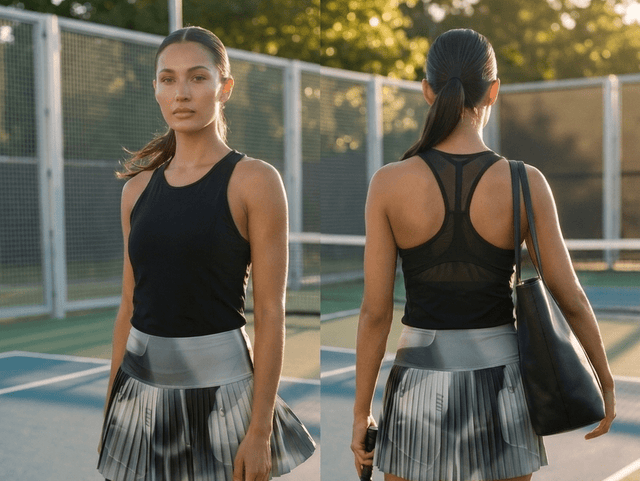
A third-set point in July reveals more about a tennis top than a fitting-room mirror ever can. When the court holds heat, your serve needs range, and sweat begins to collect at the neckline, the best breathable tennis tops women choose are the ones that feel composed under pressure. They manage moisture, move without resistance, and retain the polish that makes you feel ready to compete.
That balance matters. A tennis top is not simply a tank with a sporty label. It is a performance layer designed for repeated rotation, overhead motion, quick directional changes, and the particular confidence that comes from arriving at the club looking as considered as you play.
What Makes a Tennis Top Truly Breathable?
Breathability is often used as a catchall term, but it comes down to how well a fabric releases heat and allows moisture vapor to escape. During an active match, your body produces heat and perspiration. A top that traps either one can become heavy, clingy, and distracting long before the final game.
Lightweight technical knits are a strong starting point. Look for fabric with a fine, open construction or engineered ventilation zones, especially across the back, underarms, and sides. These areas work hardest when you are serving, returning, and moving laterally. The goal is not necessarily the thinnest material. A fabric must have enough substance to hold its shape, provide coverage, and look refined after a full morning on court.
Moisture-wicking performance is the other half of the equation. Wicking fabric pulls perspiration away from the skin so it can spread across the surface and dry more efficiently. Breathable and moisture-wicking are related, but they are not identical: a top can feel airy yet still stay damp if it does not move moisture effectively. For humid climates and long match days, you want both.
Stretch also supports comfort. Tennis is a rotation-heavy sport, and restrictive fabric becomes obvious with every forehand and overhead. Four-way stretch or a thoughtfully placed stretch panel lets the garment follow your movement while preserving a clean silhouette.
Choosing Breathable Tennis Tops for Women by Fit
The most technical fabric can still underperform if the fit works against it. The right shape depends on how you play, the conditions, and the level of coverage that helps you feel focused.
The performance tank
A sleeveless tennis tank offers maximum freedom through the shoulders and arms. It is a natural choice for hot weather, high-intensity practices, and players who prefer the least possible distraction during their swing. A racerback can create excellent mobility, while a more tailored back offers a slightly more elevated, club-ready profile.
Pay attention to the armholes. They should allow a full serve without pulling across the chest or exposing more than you intend. A well-designed tank sits close enough to stay in place but does not compress or cling when humidity rises.
The short-sleeve top
A short-sleeve silhouette provides a little more sun coverage and can feel especially polished with a tennis skirt or tailored skort. It is also a smart option when a sleeveless cut is not your preference. The trade-off is simple: sleeves add coverage, but a poorly designed sleeve can limit shoulder rotation or hold heat.
Look for soft, flexible sleeve construction and lightweight fabric at the upper back. A fitted short-sleeve top should skim the body rather than grip it. If you like a more relaxed silhouette, make sure the hem stays put during serves and does not twist as you move.
The polo-inspired top
For players who move between tennis, golf, pickleball, and lunch afterward, a breathable polo offers versatility without sacrificing a performance-minded feel. Modern polo shapes can be streamlined, feminine, and easy to pair with skirts, pants, or shorts. A collar adds structure, while technical fabric keeps the look appropriate for active play.
This is where premium design earns its place. The most versatile pieces should look intentional off court, not like an afterthought from the gym. A clean placket, a refined collar, and considered color blocking can turn a practical layer into a wardrobe anchor.
Fabric Choices That Feel Better in Heat
Synthetic performance fibers remain a practical choice for tennis because they are light, durable, and quick to dry. Recycled polyester is particularly compelling when it is engineered for softness, stretch, and moisture management. It gives players the technical benefits needed for frequent wear while supporting a more responsible approach to material sourcing.
Sustainability and performance should not be treated as competing priorities. Thoughtful manufacturing can reduce water use and material waste while delivering the recovery, color retention, and durability that a premium tennis wardrobe requires. InPhorm NYC approaches this intersection with recycled fibers, dry-dye processes, and performance-focused construction designed for life in motion.
Still, fabric preference is personal. Some players prefer a silky, smooth hand feel; others want a slightly matte finish that feels less slick against the skin. If you play in dry desert heat, an ultralight layer may be ideal. In humid conditions, prioritize rapid drying and ventilation, even if the fabric has a touch more structure.
Details That Make a Difference on Court
A breathable top should work quietly. You should not have to adjust it between points, pull at the hem after a serve, or worry about a strap shifting mid-rally. Small design decisions are responsible for that sense of ease.
Consider neckline height first. A higher crew or mock neck offers more sun coverage and a modern, graphic look. A V-neck or curved neckline can feel cooler and more open through the chest. Neither is inherently better. The right choice is the one that lets you move confidently without checking your coverage.
Hem length matters, too. Cropped styles can look sharp with high-rise skirts or leggings, but they are not for every player or every setting. A standard-length top that reaches the waistband is often the most versatile, particularly when you want consistent coverage during movement. Slightly longer styles can create a sleek line with leggings and perform well for early-morning training or travel.
Built-in bras deserve careful consideration. They can reduce layering and offer a clean finish, but support needs vary greatly by body and activity level. For high-impact movement or a fuller bust, a separate performance bra may offer a more individualized fit. For a casual hit, drills, or warm-weather play, an integrated shelf bra may be all you need.
Build a Court Wardrobe Around Color and Proportion
Breathable performance does not require an all-black athletic uniform. Tennis apparel has room for crisp white, saturated color, subtle prints, and tonal neutrals that feel distinctive without overwhelming the rest of the outfit.
Start with proportion. A fitted tank balances a softly flared skirt. A relaxed polo looks especially modern with a streamlined skort. If your bottom has a print, choose a solid top that picks up one color from the pattern. If your top has a bold placement detail or color-blocking, ground it with a clean neutral bottom.
White remains a court classic for good reason: it reflects heat, pairs easily, and always looks fresh. But white can show sweat more readily depending on fabric and construction. If that is a concern, explore deeper shades, subtle texture, or thoughtfully placed prints. The best choice is the one that lets you stay present in the point, rather than self-conscious between games.
For players who want more from every piece, select tops that can move beyond tennis. A refined tank can pair with a lightweight layer and wide-leg pants after practice. A technical polo can serve for a round of golf or a casual workday under a tailored jacket. Versatility is not about owning less style. It is about choosing pieces with enough design intelligence to earn frequent wear.
Care That Preserves Breathability
Performance fabric needs deliberate care to keep doing its job. Wash tennis tops promptly after play when possible, especially after sunscreen, sweat, and clay-court dust have settled into the fibers. Turn garments inside out, use cold water, and choose a mild detergent.
Avoid fabric softener. It can leave a coating that reduces a garment's ability to wick moisture and dry efficiently. High dryer heat can also affect stretch fibers over time, so air drying or low heat is usually the better choice. These simple habits help preserve shape, color, and the technical feel that made the top worth choosing.
The right tennis top should give you more than relief from the heat. It should help you move with clarity, feel put together from first serve to post-match plans, and make every repeat wear feel like a considered choice.
Find similar articles:
ACTIVEWEAR Lifestyle tennis apparel tennis apparel women tennis clothes tennis clothes women tennis clothing TENNIS LIFESTYLEMentioned in this article
More stories

Best Golf Dresses for Summer: What Matters Most