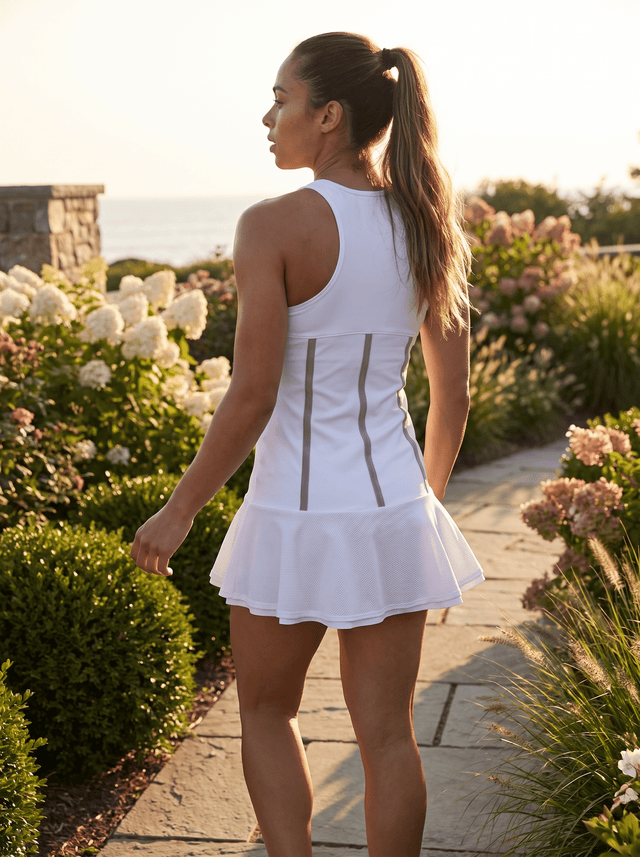
A bright court can turn quickly from energizing to punishing. When the match runs long, the sun reaches the shoulders, chest, back of the neck, and legs long before most players realize it. The top sun protective sportswear does more than look polished for the club. It gives active women a more considered way to dress for hours of movement, heat, and exposure.
Sunscreen remains essential, but apparel is the layer that does not sweat off, wear away with a towel, or require reapplication between points. The right pieces should feel light, allow a full serve or golf swing, and bring enough refinement to carry the rest of the day. That balance is where technical design matters.
What Makes Top Sun Protective Sportswear Worth Wearing
Sun-protective activewear starts with UPF, or Ultraviolet Protection Factor. Similar to SPF in sunscreen, the number indicates how much ultraviolet radiation is blocked by a fabric. UPF 50 fabric allows only a small fraction of UV rays through, making it a strong standard for long outdoor sessions.
Still, the tag is only part of the equation. Coverage, construction, color, fabric density, and condition all influence how well a garment performs. A lightweight long-sleeve layer with a collar can offer more practical defense than a sleeveless piece, even if both are made from thoughtfully engineered materials. That does not mean every player needs to dress head to toe in long sleeves. It means choosing coverage with intention based on the sport, the forecast, and how long you expect to be outside.
For tennis, pickleball, and padel, mobility around the shoulders and elbows is non-negotiable. For golf, ease through the torso and arms matters just as much, especially at the top of the backswing. The best sun-conscious styles protect without feeling restrictive or adding visual bulk.
Begin With the Areas That Get the Most Sun
A smart sun-protective wardrobe is built around the places sunscreen is easiest to miss or hardest to maintain. The upper back, shoulders, décolletage, forearms, and neck deserve special attention, particularly during midday play.
Choose sleeves for the conditions, not the calendar
Long sleeves are an elegant choice for extended play, mountain elevation, beach courts, or any day with little shade. Look for a smooth, breathable fabrication with stretch and a close-but-not-compressive fit. A sleeve that twists during a forehand or feels damp after one set will stay in the drawer, no matter how protective it is.
Three-quarter sleeves can be a useful middle ground when full-length coverage feels too warm. They shield much of the arm while keeping the wrist free for a watch, grip adjustment, or repeated ball pickup. On lower-exposure days, a sleeveless performance tank can still be the right call, especially paired with sunscreen and a lightweight layer for warm-up, changeovers, or the walk back to the car.
Give the neck and chest a stronger strategy
A collar is not simply a classic club-sport detail. It creates adjustable coverage. Worn up, it can shield the back and sides of the neck; worn open, it keeps the look relaxed once the sun is lower. Zip-neck tops and polished mock-neck silhouettes offer a similar advantage, with flexibility to respond to changing temperature.
For lower-body coverage, skorts, dresses, and shorts should be selected with the full day in mind. A longer skort may be welcome for a sun-heavy golf round, while a shorter silhouette can feel more natural for fast court movement. The deciding factor is confidence: a player who is constantly tugging at a hem is not focused on her next shot.
Fabric Must Manage Heat as Well as UV Exposure
The common concern about more coverage is overheating. It is a valid trade-off, but well-designed performance fabric changes the experience. Breathability, moisture management, airflow, and stretch are what make sun-protective pieces viable when temperatures climb.
Seek fabrics that move perspiration away from the skin and dry quickly between games. A refined knit with enough structure will also retain its shape, so a polo collar stays crisp and a long-sleeve top continues to look elevated after a full afternoon outside. Stretch should support dynamic movement in every direction rather than create a thin, overextended feel.
Color deserves a more nuanced approach than the old rule that only white belongs in summer. White and pale shades can feel cooler in direct sun and bring a clean, sport-forward look. Deeper colors may absorb more heat, yet they can also offer rich visual coverage and a more forgiving finish during high-output sessions. The better choice depends on your heat tolerance, setting, and the fabric’s overall performance. A beautifully engineered navy or black layer can be an excellent early-morning or shoulder-season essential.
Build a Sun-Smart Outfit That Still Feels Like You
Performance dressing works best when it is flexible. Rather than buying one outfit for the sunniest possible day, create a small rotation that lets you adjust without compromising your personal style.
Start with a base silhouette you genuinely enjoy wearing, such as a fitted tank and skort, a tailored polo dress, or a polished short-sleeve polo with a performance skirt. Add one light long-sleeve layer that coordinates with several pieces. This creates options for early tee times, windy courts, travel days, and late-afternoon matches, without requiring a separate wardrobe for every forecast.
For women who prefer a more streamlined look, coordinated sets offer an especially strong answer. Matching tones elongate the silhouette, while a thoughtfully cut jacket or long-sleeve top makes the outfit feel complete beyond the court. InPhorm NYC approaches this balance through elevated silhouettes and performance-minded fabrics designed for sport and the life around it.
Accessories should be treated as part of the protection plan, not an afterthought. A brimmed hat or visor protects the face and eyes, while UV-blocking sunglasses reduce glare that can interfere with tracking a serve, a lob, or a golf ball against a bright sky. Choose a hat that stays secure during movement and sunglasses that do not slide once you begin to sweat.
Fit Can Strengthen or Undercut Performance
Garments protect best when they maintain their intended coverage. An oversized top may expose the shoulder as it shifts, while a very tight fabric can stretch thinly over the body and feel hotter than necessary. Aim for a fit that follows your movement without pulling across the back, bust, or arms.
Before committing to a new layer, test the motions your sport demands. Raise both arms as if serving. Rotate through a golf swing. Bend to collect a ball. Sit down, reach forward, and move through a few quick lateral steps. The garment should return to place without constant adjustment.
Pay attention to practical details as well. Flat seams help reduce friction during long wear. Secure pockets make a skort or jacket more useful. A higher neckline can be welcome in full sun, but only if it sits comfortably through a full range of motion. Premium activewear earns its place through these quiet decisions, not just its first impression in the mirror.
Care Protects the Protective Qualities
Technical apparel deserves deliberate care. Follow the garment label, avoid excessive heat, and skip fabric softener unless the instructions specifically permit it. Softener can leave a coating that interferes with moisture-wicking performance. Let pieces dry fully before packing them into a gym bag, where lingering moisture can affect both freshness and fabric longevity.
Replace garments when the fabric becomes excessively thin, damaged, or permanently stretched out. Sun protection is not only about the original specification. It is about how the piece performs after repeated wear, washing, and exposure.
The most effective sun-protective wardrobe is the one you will reach for consistently. Choose pieces that honor your game, suit the conditions, and make you feel composed from first serve to final errand. That is protection with purpose, and style built to stay in play.