


The best family matching activewear does not start with a novelty print or a one-time photo moment. It starts with pieces that move well, fit beautifully, and still look refined after the match, the lesson, the range session, or the coffee stop afterward. For families who spend real time on court, on the course, and in motion, coordination only works when performance and polish come first.
That is what separates elevated coordinated dressing from costume-like sets. When the styling is considered and the fabrication is technical, matching becomes less about looking identical and more about expressing a shared standard. The result feels modern, athletic, and intentional.
Why family matching activewear feels current again

There is a reason coordinated dressing has moved beyond holiday pajamas and vacation snapshots. Active families want wardrobes that support how they actually live. That often means overlapping schedules, shared sports, and clothing that can move between performance and everyday wear without losing its shape or point of view.
Family matching activewear fits naturally into that shift because it offers visual cohesion without asking anyone to compromise function. A mother heading to tennis, a partner going to the driving range, and kids moving through school, clinics, or weekend play all need different silhouettes. The connection comes through color, fabrication, and design language rather than exact duplication.
That distinction matters. Matching looks strongest when it respects the role each garment needs to play. A high-support bra, a tailored men’s polo, and a kid’s lightweight top should not be forced into the same styling formula. They should feel related, not uniform.
What to look for in family matching activewear
Premium coordinated activewear should hold up on three fronts - design, performance, and longevity. If one of those elements is missing, the wardrobe tends to feel disposable.
Design is the first filter. Clean lines, modern color palettes, and sport-informed silhouettes keep coordinated looks elevated. This is especially true for tennis, golf, pickleball, and padel, where appearance is part of the culture of the sport. Matching works best when the pieces look individually strong on their own, not just as part of a set.
Performance is the second filter. Breathability, stretch, moisture management, and ease of movement are not extras. They determine whether a piece is something your family reaches for repeatedly or leaves behind after one wear. A polished look means very little if fabric feels heavy during play or restrictive through a full swing, serve, or quick lateral movement.
Longevity is where value becomes clear. Families who invest in premium activewear are usually looking beyond a single season. They want color that stays crisp, shape that recovers, and styling that remains relevant. Timeless sport pieces with technical credibility tend to deliver far more wear than trend-led options that peak quickly.
Matching does not mean identical
One of the biggest mistakes in family styling is assuming everyone should wear the exact same piece in the exact same shade. In practice, that can feel rigid and unflattering. Better coordination comes from building around a shared palette and letting each person wear what suits their sport, body, and comfort level.
For women, that might mean a performance dress, skort, or fitted tank layered with a sleek jacket. For men, the same visual language may appear through a structured polo and lightweight short or pant. For kids, the best option is often the easiest one to move in, with enough stretch and softness to keep up with a day that rarely stays still.
This approach gives the family look cohesion while preserving individuality. It also photographs better. When proportions vary naturally and silhouettes feel authentic to each wearer, the end result looks aspirational instead of forced.
The sports where coordinated dressing works best
Some categories of activewear lend themselves especially well to family coordination. Court and club sports are at the top of the list because they already favor crisp, composed dressing.
Tennis and pickleball
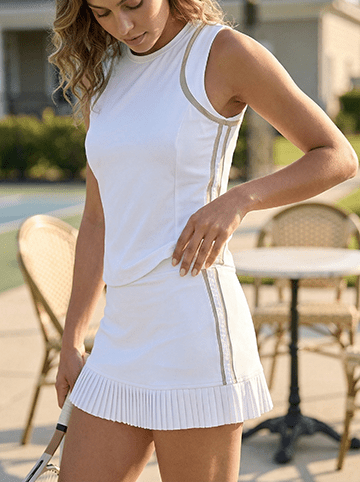
Tennis and pickleball are ideal for coordinated style because both sports reward movement and visual clarity. Polished skorts, performance polos, lightweight layers, and streamlined separates create an immediate sense of order. A family can align around a white, navy, black, or color-accented palette without losing a sense of personal style.
The key is balance. If one family member wears a statement print or bold color block, the rest of the group often looks best in quieter companion pieces. That keeps the look intentional rather than overly busy.
Golf and padel
Golf and padel also support family matching naturally, but they call for slightly different priorities. Golf often leans more tailored, with attention to structure, collar shape, and course-appropriate polish. Padel brings a bit more edge and speed, which can support sharper athletic silhouettes and lighter layering.
In both cases, coordinated dressing works when the garments are technical enough for the sport and refined enough for everything around it. That is especially relevant for families who want pieces that transition from play to lunch, errands, or travel.
Why fabric matters more than the match
Visual coordination may draw attention first, but fabric is what determines whether family activewear earns a place in regular rotation. Premium materials make matching feel elevated because they improve both appearance and experience.
Breathable fabrics keep layers comfortable through changing temperatures and longer sessions. Stretch allows for a natural range of motion, which matters whether you are serving, lunging, or walking a full course. Recovery helps garments maintain their shape, which is essential in fitted pieces and in items meant to look crisp after repeated wear.
There is also the question of sustainability. For many modern shoppers, especially those making considered purchases for multiple family members, the value of activewear is tied to how it is made. Recycled fibers, lower-impact dye processes, and responsible manufacturing practices are no longer niche concerns. They are part of the quality conversation.
That is where premium brands have an opportunity to lead. InPhorm NYC, for example, approaches activewear with equal attention to performance design and eco-conscious production, which is exactly the balance discerning families increasingly expect.
How to build a coordinated wardrobe without overbuying
The smartest family activewear wardrobes are not built around large matching hauls. They are built around a compact set of versatile pieces that can be styled together repeatedly. This matters both aesthetically and practically.
Start with a core color story. Neutrals with one accent color tend to create the most mileage because they can be mixed across women’s, men’s, and kids’ pieces without looking repetitive. Navy, white, black, and soft green or blue accents are especially adaptable for court and golf wardrobes.
Then think in layers and anchors. A polished jacket, a performance polo, a reliable skort, a clean legging, or a tailored jogger can each act as a visual anchor. Once those are in place, coordination becomes easy because the family look is supported by a consistent design language rather than a one-note set.
There is a trade-off here. A tightly coordinated wardrobe looks strong in photos and feels cohesive, but too much sameness can limit flexibility. The better strategy is to buy pieces that work together while still standing on their own. That gives each family member more ways to wear them, which usually leads to better cost per wear.
Fit is where premium activewear proves itself
A coordinated look only feels polished when each piece fits properly. This sounds obvious, but it is often overlooked in family shopping because people focus on matching colors first. In reality, fit shapes the entire impression.
Women’s activewear often needs to balance support, contour, and comfort, especially in tennis and golf silhouettes that move between athletic performance and social settings. Men’s pieces benefit from clean tailoring that avoids both cling and excess volume. Kids’ styles need enough structure to look put-together, but not so much that movement feels restricted.
This is another reason family matching works better with elevated sportswear than with generic set dressing. Premium brands tend to design with the body in motion, not just the body standing still. That difference shows up quickly in posture, comfort, and confidence.
The real appeal of matching as a family
At its best, coordinated activewear is not about perfection. It is about shared energy. It signals that your family values movement, style, and quality in a way that feels effortless rather than staged.
There is also something quietly practical about it. Coordinated wardrobes simplify dressing for early tee times, weekend tournaments, resort mornings, and travel days. They create a sense of readiness. And when the pieces are genuinely well made, they support more than a look - they support a lifestyle.
For families who care about how they present themselves, family matching activewear offers a refined way to dress with purpose. Choose pieces that perform first, flatter naturally, and align through thoughtful design. The match should feel like the finishing touch, not the entire idea.
Mentioned in this article
More stories
Sustainable Women’s Tennis Apparel That Performs
